Showing posts with label fantasy. Show all posts

Monday, March 24, 2014

Review: The Thinking Woman's Guide to Real Magic

The Thinking Woman’s Guide to Real Magic by Emily Croy Barker

Nora, a graduate student in English, is at a rough spot. Her long-time boyfriend has left her for another woman and her dissertation just isn’t going well. Walking in the woods one day, she finds herself in an unfamiliar setting, the estate of a beautiful woman named Ilissa who inexplicably treats her like a cherished guest and begs her to stay. Soon Nora finds herself involved with Ilissa’s son, Raclin, like Ilissa too good to be true. When this idyll becomes ominous, Nora is assisted by the magician Aruendiel who eventually takes Nora on as an apprentice.


This book had everything I really love in a book: magic, fairies, romance, strong character building, and a fully-formed world. It’s a very long book, and I was completely engrossed the whole time I was reading. The one thing I object to in this book, and it’s sort of a big one, is that nothing at all was resolved. The romance—nope. The villains—at large. The disappeared good guy—missing. I guess in my husband’s favored genres (sci fi and fantasy) this is normal, but I’m not used to it, especially when the book isn’t introduced as “Book one of a trilogy” or something like that.  I did love this world and want to stay in it, and the fact that the book ended unresolved made me salivate for the sequel, but no clue when (if) that will be coming along. 4.5/5* 

Sunday, February 16, 2014

Review: Princess Bride

The Princess Bride by William Goldman

I can’t imagine anyone who hasn’t seen the movie; it’s one of our family’s iconic texts. So rather than a normal book review, here I’ll concentrate on book/movie contrasts. First, I started this book once, many years ago, and was supremely bored by it. I put it on a shelf, but didn’t get rid of it. Recently, I decided to cull my bookshelves and rather than just dumping it, I decided to give it one more shot.
I think what bored me the first time was the prologue. The movie’s frame (sick little boy being read to by grandpa) is introduced  by a lengthy and sort of whiny prologue in which the narrator (author?) relates how he’s contemplating adultery  in L.A. but instead returns home to his indifferent wife and spoiled son. He remembers the best book in the world which his father read to him, and determines to fetch it for his son. It turns out to be really boring in parts, so he revises it to just have the good parts so his son will enjoy it more.  (I know, you’re bored just by my relating this much. Imagine 20 pages of it).

Once I got to the story part, it mirrors the movie very closely, down to the dialogue. It does have little bits that aren’t in the movie, though, and of course, it was great fun to find them and imagine them as acted by our old friends. (In terms of casting, the movie nailed it, except for Prince Humperdinck.) When you love a movie this much, it’s a joy to add on to the lore. And don’t feel guilty for skipping the prologue. 5/5*

Friday, January 24, 2014

Review: Eyre Affair

Author: Jasper Fforde

Title: The Eyre Affair
Description: This is a steampunky mystery about literature, so if that doesn’t cover all your bases, you’re too hard to please. Thursday Next is a literary detective in a world where literature affects the “real” world, where time travel is pretty commonplace (in fact, her father only blips in from his time travels on rare occasions), and where the world’s most vicious criminal has just stolen the original manuscript of Martin Chuzzlewit.  
Review source: This was my choice for our book group read.
Plot: I thought the plot was a bit busy, but that may be because the book is the first in a series. Either way, too many genres converging can get a little overwhelming.
Characters: Fforde is writing everything with his tongue in his cheek, so characters have silly (and sometimes scatological) names, and of course, people with silly names can’t be taken seriously, can they?
Writing style: More steampunky science fiction than mysterious, but the mystery conventions are there too. And humor spread over it all. Imagine Douglas Adams with more genres and a female protagonist.
Audience: As I said, if you’re not covered by one of the genres in this book, well, I guess you’ll pick it up because it’s literary fiction. (ha!)

Wrap-up: The book was probably a little too silly for my taste (i.e. I won’t be seeking out the next title in the series), but it was ok for something different. 3/5*

Wednesday, June 19, 2013

Review: Modern Grimmoire

Title: Modern Grimmoire
Description: This is a collection of fairy tale-inspired stories, poems, and art.  

Writing style: This is an anthology, so each author has a little different approach, but for the most part the authors do capture that fairy tale style of everything being extreme and anything happening. The publisher is a non-profit, and the book is beautifully constructed (and the art was juried along with the stories).
Audience: It’s fantasy short stories. Those people who enjoy fairy tale retellings know who they are. (To clarify, some of these are new takes on old fairy tales, while others are totally new stories written in fairy tale style).

Wrap-up: I’m one of those people who does enjoy fairy tale retellings, so I was looking forward to this book. Those of you who read this blog know that I tend to not love collections, because I like a sustained voice/narrative. So there’s that. The contributors to this collection tend to be MFA students, some creative writing instructors, and so on. There are no really big names. And frankly, the big names are usually big for a reason. So I love fairy tales by Neil Gaiman, Tanith Lee, Robin McKinley, etc. These are a notch below that, but a good effort. 3/5*

Tuesday, June 4, 2013

Book Review: The Sword

Author: Bryan Litfin
Title: The Sword (Book 1 of the Chiveis Trilogy)

Description: In the distant future, after human civilization has collapsed in on itself and people have gone back to living off the land, farmer’s daughter Ana and royal soldier Teo meet and become friends. For some reason, Ana is being pursued by unknown enemies, but Teo is quite capable of stepping in to save her. As they return to safety, they come across some ancient writings that seem to point toward a religion that has long been forgotten, but rings true to them.  
Review source: It was free for Kindle.
Plot: I didn’t realize this was Christian fiction until about halfway through. It’s interesting to speculate about what might happen if every trace of Christianity were eliminated from a civilization (this culture worships deities much like the Greek gods). An awful lot happened in this book. (That means—too much plot).
Characters: Ana is perfect (i.e. boring). Teo is perfect, except that he believes in himself, not in God.  Secondary characters are pretty much one-note.
Writing style: It’s pretty straightforward, klunky at times.
Audience: It’s Christian fantasy.

Wrap-up: Not the best of the kindle freebies I’ve picked up. Also, the book ends in the middle of things, so don’t bother unless you want to read the trilogy. 2/5*

Wednesday, May 29, 2013

Book Review: Svaha

Title: Svaha

Description: In a post-apocalyptic world, the native Americans have retreated to havens called “enclaves,” while the other remnants of society, mostly dominated by super-corporations and Japanese mobsters, fight it out in an urban wasteland. When a crucial bit of enclave technology goes missing, all of these powers—plus some powerless pawns who get caught up in the drama—go after it.  
Plot: I think I’ve summarized it quite nicely for you, above. It took me many, many pages into the book to figure all this out. In other words, it was confusing, to say the least. Too many point-of-view changes and disparate characters and not enough early backstory.
Characters: Unlike some of his later work, Svaha doesn’t showcase de Lint’s mastery of character. This one is more plot-driven.
Writing style: de Lint has a trademark style of urban fantasy: heavily infused with folklore (Native American, Celt, whatever), set in a Canadian city that borders on all manner of other-worldly spaces, and with a recurring set of characters. This book has very little of those elements (which I’m very fond of), and leans more toward heavy science fiction than his more familiar fantasy.
Audience: Science fiction fans. (I gave this one to Steve when I was done with it). Fans of de Lint from his other books: be prepared for something really different.

Wrap-up: I liked it by the end, but most of it was a grind to get through. 3/5*

Monday, July 30, 2012

Book Review: Albert of Adelaide

Author: Howard L. Anderson
Title: Albert of Adelaide
Description: This book is about a platypus, Albert, who escapes from the zoo in Adelaide and sets out to find the platypus paradise. He’s not quite sure how to get there, but he starts out nonetheless. Along the way, he meets the wombat Jack, the raccoon TJ, and an assortment of good guys and bad guys.
Review source: netgalley
Plot: I had this book in my to-read list. I can’t imagine what it was about a description or a review that would have made me want to read it. Basically, it was a western, with gambling, drinking, outlaws, and wanted posters.
Characters: Albert seems innocent and naïve at first (think the Madagascar crew set loose in the jungle), but he’s quick to want to punch, shoot, and pull out those poison spikes. The quick recourse to violence is not my style, but I suppose it fits with the western idea.
Writing style: Seen from Albert’s point of view, everything that happens is a new surprise. So there’s this naïveté joined with linear reporting (“Albert noticed that they were playing some kind of game with dice. He felt lucky.”)
Audience: ? People who like westerns about Australian mammals?
Wrap-up: This book was just a little too innovative for me. That, plus the idea of killing people as the solution when you can’t get along made this book not quite my cup of billabong tea. 3/5*.

Saturday, January 7, 2012

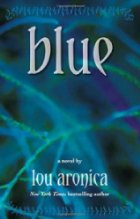
Book Review: Blue

Author: Lou Aronica  
Title: Blue
Description: Becky is 14 and splits her time between her squabbling divorced parents. Chris, her dad, regrets that they have grown apart, but isn’t quite sure how to heal the widening gap between them. He recalls how years ago, when Becky was undergoing treatment for childhood leukemia, the two of them would make up stories every night about a fantasy world called Tamarisk. One night, Becky actually travels to Tamarisk and meets Meia, the young queen. Tamarisk is facing an environmental disaster, which Meia hopes Becky and Chris can help her solve.  Meanwhile, is Becky’s leukemia returning?
Review source:  this was a free book from Amazon for the kindle.
Plot: The plot moves back and forth between earth and Tamarisk and the narrative is from various points of view: Becky’s, Chris’s, Meia’s, and even some secondary characters. For me, this made the novel uneven and sort of “jerky.” There were several plot points that were not cleared up (not sure if that means there will be a sequel or not).
Characters: The main character issues are that Becky is a teenager and has difficulties getting along with both of her parents, who have major problems getting along with one another. Meia had to abandon a romance when she became queen and now struggles with loneliness and isolation. On the whole, the reader is told about a lot of personal difficulties, but the story doesn’t really support them. For example, why do the parents hate one another so much? Polly, Becky’s mom, announced she wanted a divorce, but we’re never really told why. Why can’t they just get along better? Why did Meia have to give up a romance? There’s no law against the queen being married. Etc.
Writing style: As you might have sensed, I had some problems with the writing style. I’ve already mentioned the abrupt shifts in point-of-view and narrative. Then there are the Tamariskian features. So Becky and her dad made up all these weird animals, foods, substances, etc. for Tamarisk, and we’re introduced to a bunch of them. Way too many. All these made up words just to show us that things are different there. Yawn.
Audience: The book doesn’t appear to have been written for the YA audience, but that’s how I’d class it. There’s no graphic anything.
Wrap-up: I did finish the book, but I was underwhelmed by it. 2.5/5*

I'm claiming this book for three reading challenges: the new author challenge (3/15), the unread books challenge, and the Why Buy the Cow challenge (3/12).