Showing posts with label nonfiction. Show all posts

Sunday, January 5, 2014

Review: Praying for Sheetrock

Author: Melissa Fay Greene
Title: Praying for Sheetrock
Description: McIntosh County Georgia has been under the thumb of white county sheriff Tom Poppell (and before that, his father) for decades. In the early 70’s, though, the majority black population decides they have had enough.  
Source: It’s on the EW list.
Writing style: This is literary fiction, and Greene is a fine storyteller. In many spots it reads like a novel; she has had interviews with many of the principals here, so has access to many of the thoughts and feelings that are often unavailable to authors of this type of book.
Audience: People interested in race relations, history of the South, and literary nonfiction in general.
Major ideas: The black people in McIntosh County really have no idea that they can change the status quo until they are pushed too far. This is an interesting story of how they realize they can take agency and begin to assume a political role in their own lives.

Wrap-up: I really enjoyed reading this book. Greene did extensive documentary research and interviews, and pieces it together to tell a fascinating story. 4/5*

Tuesday, June 11, 2013

Review: Shakespeare's Tremor & Orwell's Cough

Author: John J. Ross

Title: Shakespeare’s Tremor & Orwell’s Cough
Description: A medical doctor examines existing textual evidence about several different authors (also Milton, Melville, the Brontes, Hawthorne, Swift, etc.) to hypothesize about what was going on medically with them.   
Writing style: Most of the selections begin with a fictionalized scenario showing the author interacting with medical personnel and then review the author’s symptoms, describe the diagnoses they were given, and then give a conjecture about how they might be diagnosed/treated today.
Audience: Folks who are interested in literary or medical history.
Major ideas: I found the book most interesting when the illnesses involved mental disorders, since they were often reflected in the authors’ writings.

Wrap-up: I enjoyed this book as something different. 3.5/5*

Sunday, March 24, 2013

Review: The Secret Life of Pronouns


Author: James W. Pennebaker
Title: The Secret Life of Pronouns: What our Words Say about Us
Description: Pennebaker and his colleagues have developed computer analysis routines that analyze our words—our tweets, our writing, our conversations, the speeches of politicians, and so on. He found that what we have thought are telling clues to what someone says are not necessarily the most important indicators. The title refers to the use of personal pronouns, chiefly “I,” “you,” and “we,” which can hold some of the greatest influence in our speech.
Writing style: The book is pretty well written for an account of many academic studies (I liked it better than Ariely’s book, for example), but that’s still what it is. Again, the correlation of types of speech to what they indicated gets confusing by the end of the book.
Audience: Anyone with an interest in language and language use.
Major ideas: Unconscious indicators like use of pronouns, positive words, action words, and so on give away a lot. It’s probably asking too much for us to be able to always be conscious of these types of words in our own speech, or that of those with whom we are having a conversation, but he does provide a website that can analyze our tweets.
Wrap-up: This was an interesting read that made me much more aware of the subtle clues I give in my written and spoken communication. 3/5*.

Monday, September 3, 2012

Book Review: Witches (YA)


Author: Rosalyn Schanzer
Title: Witches!: The Absolutely True Tale of Disaster in Salem
Description: A nonfiction account of the Salem witch trials, written for grades 6-10.
Source: ALA
Writing style: Documentary, and incorporating primary source material from time to time. There are some accounts of torture and stories of supposed devil-worship that might bother some kids (or their parents).
Major ideas: The author speculates about what might have caused the witch hunts, but she does not go out on a limb to assert any radical theories. She tells the story chronologically and points out—rather subtly—the opportunities that people had to make moral choices and the outcomes of those choices.
Wrap-up: This was an engaging tale of a truly horrifying period in America’s history. I should also mention the scratchboard illustrations, which I thought lent some sophistication to the book. 3/5* (just because I’m not the target audience)

Saturday, September 1, 2012

Some of my Favorite Nonfiction


Today I’d like to highlight some of my favorite types of nonfiction. I mentioned one of my favorite nonfiction genres last time: booksabout competition.  They aren’t the only type of nonfiction I enjoy, though. I’ve also mentioned here some of my favorite Christian authors, and they often write in another genre that I enjoy, the spiritual memoir. Here I would mention Traveling Mercies and Girl Meets God as highlights.

I also enjoy reading accounts of travel, especially the sort of “western everyman set down in Asia” type of book typified by a title like Learning to Bow: Inside the Heart of Japan  by Bruce Feiler.  Another subgenre of travel books I love are trail books; the king of them all is Bryson’s A Walk in the Woods, and I’m really looking forward to reading Wild: From Lost to Found on the Pacific Crest Trail by Cheryl Strayed.

Being a trivia buff, I also enjoy reading books about trivia. A. J. Jacobs did a good job with The Know-it-All: One Man’s Humble Quest to Become the Smartest Person in the World. (I’ve enjoyed his other books as well). In a similar vein are the books where someone tries something unusual and writes about it: Supersize Me (Morgan  Spurlock), Nickel and Dimed (Barbara Ehrenreich), Pledged, etc.

I’m looking forward to reading more nonfiction—let me know if you have any titles you think I’d love!

Wednesday, August 29, 2012

Book Review: The Customer-Driven Academic Library


Author: Jeannette A. Woodward
Title: The Customer-Driven Academic Library
Description : Woodward’s contention is that as library tasks have become more specialized, the librarians have retreated more and more into their offices, leaving the library employees with less  training to do the crucial work of interacting with the customers.  
Writing style: Very readable, though the book isn’t about style but about ideas.
Audience: Academic librarians.
Major ideas: I’ve had this idea about university faculty as well. Although the naïve bystander might think that faculty are there to help students, I’ve learned that faculty are there to get tenure.  Woodward pushes this idea back on the library, and it’s a convincing argument. Although she doesn’t dwell on personality, I believe that most librarians are introverts, and are more comfortable not dealing with people as a major focus of their jobs. By indulging ourselves in this way, however, we run the risk of hastening the demise of the academic library; if the only workers anyone encounters are students, they will quickly begin to question why librarians are being paid to hide in the back rooms.
Wrap-up: This small book doesn’t contain all of the answers to the present library crisis, but it does present a persuasive argument that academic librarians need to spend more of their professional time interacting with students and faculty and less time indulging their penchant for the ivory tower. 4/5*

Monday, August 27, 2012

Book Review: Parting the Waters


 Author: Taylor Branch
Title: Parting the Waters: America in the King Years, 1954-1963
Description: An extremely detailed account of the rise to prominence of Martin Luther King, Jr. and his allies and detractors.  
Writing style: I’d call it “dry.” Lots of conversations reported verbatim. I can’t imagine the years of research that must have gone into the writing of this book.
Audience: Those interested in modern American history and the Civil Rights movement.
Major ideas: I have to admit, I didn’t know much about the early history of the civil rights movement. What I learned that surprised me: there was significant infighting among those who sought to improve conditions for African-Americans in the South, some civil, some not-so-much; MLK was often conflicted about which path to take; Kennedy wasn’t much for civil rights; sometimes I am just so ashamed of how people can treat one another.
Wrap-up: This book was on the Entertainment Weekly list that I’m trying to read through or I would not have picked it up—I would not read this book on my own. It was 922 pages of extremely detailed text and took me 3-4 years to read. So, it wasn’t my favorite read of the year, but I’m certainly not sorry I took the time to learn about this aspect of our nation’s history. 3/5*

Monday, August 13, 2012

The Thrill of Victory


You’ve probably noticed that the Olympics wound up last night. This results in me missing a lot of my reading time, therefore finishing fewer books, therefore writing fewer reviews. Or maybe you haven’t noticed because you’ve been watching the Olympics, not reading blogs. In case you didn't get enough competition--or in case you don't care about the Olympics but want something fun to read--here's a list of books about competitions that I've enjoyed over the years.

Why the name "William Goldman" sounds familiar
John Feinstein specializes in following a sport for a whole season; I’ve enjoyed both A Good Walk Spoiled (about golf) and A Season on the Brink (about Bobby Knight at Indiana). Though they are both somewhat dated now, I’d recommend any book on sports that he writes.

I love William Goldman and would read just about anything he writes. He is the only person to have judged at Cannes and at Miss America  in the same year. Hype and Glory is the book he wrote as a result, giving behind-the-scenes dish on both competitions.

Word Freak is an insider’s look at the world of competitive Scrabble playing by Stefan Fatsis. He also has a couple of books on “real” sports like baseball (Wild and Outside) and football (A Few Seconds of Panic). 

Finally, my favorite book on competition was written by a personal friend, and I’m even in it! Don’t miss Prisoner of Trebekistan by Bob Harris (and look for his new book, coming out soon, on his adventures in micro-finance, The 1st International Bank of Bob, sure to be a fun read!

Saturday, July 21, 2012

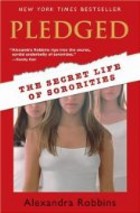
Book Review: Pledged

Author: Alexandra Robbins
Title: Pledged: The Secret Life of Sororities
Description: Robbins spends a year following for sorority sisters on a college campus. The sororities were worried about publicity, so she had to go “undercover.” The picture that emerges is not a flattering one for most mainstream sororities.
Writing style: Excellent narrative non-fiction. The four girls’ stories are tracked through the school year, but in each chapter, Robbins also widens her focus to discuss the national picture regarding sorority issues such as sex, body image, drinking, and charity work.
Audience: If you like narrative non-fiction, this book is for you.
Major ideas: Sororities could be a force for good (witness most minority sororities), but are instead social clubs and money-making ventures.
Wrap-up: I brought six other books on vacation but finished this one first. 4/5*

Thursday, July 19, 2012

Book Review: In the Heart of the Sea

Author: Nathaniel Philbrick
Title: In the Heart of the Sea: The Tragedy of the Whaleship Essex
Description: Moby Dick was based on a true story; the story of the Essex, a Nantucket whaleship that was rammed by a whale. The crew was forced to take the three whaleboats and try to reach land.
Source: I <3 Penguin
Writing style: Absolutely fascinating. Meticulously researched, based on primary sources, and riveting.
Audience: Anyone.
Major ideas: History can be better than a novel. I could never finish Moby Dick.
Wrap-up: I loved this book. The sailors seemed real to me; who would live and who would not? I loved the Stormalong John tales as a kid, and my ancestors are from New England. Maybe I just have some sea water in my blood. 5/5*

For a more light-hearted look at life on (and off) the ship, click here. 

Wednesday, July 18, 2012

Book Review: Three Cups of Tea

Author: Greg Mortenson & David Relin
Title: Three Cups of Tea: One Man’s Mission to Promote Peace … One School at a Time
Description: This book is pretty well known by now, but if you haven’t heard: Greg Mortenson gets lost in Pakistan and in gratitude to the village that took him in, promises to build them a school. With almost no resources, he manages to get it done, but it is just the first of many schools he builds in Pakistan and Central Asia.
Source: The Penguin treasure-trove.
Big Caveat: About a year ago, a bunch of articles came out that exposed several parts of this book as fictional. There have also been questions about Mortenson’s management of money and the resources of the Central Asia Institute. With no strong rebuttal from Mortenson or the publisher, those allegations were constantly in my mind as I read this book; I have to admit to looking at it pretty cynically.
Writing style: There were some issues here. For one thing, though Mortenson is listed as the primary author, the book is written in the third person. That allows for as much aggrandizement of Mortenson as possible without it sounding like boasting. This got on my nerves.
Audience: The book could be read by anyone; it doesn’t seem geared toward a certain audience. I know it has been chosen for multiple One Reads.
Major ideas: The way to combat terrorism is through education, not war.
Wrap-up: The controversy surrounding the book and Mortenson’s eagerness to embrace the role of hero both bothered me. I didn’t think the book was especially well-written, though I do think the message is important. 2/5*

Monday, July 16, 2012

Book Review: The Paradox of Choice

Author: Barry Schwartz
Title: The Paradox of Choice: Why More is Less
Description: Schwartz wondered why, when we have more choices than ever before, are we so conflicted when making choices? Shouldn’t we all be much happier than in the past, when our choices were so limited?  Note: the book is not necessarily about how to make decisions, but about what happens psychologically when people are faced with multiple options.
Source: Penguin
Writing style: Schwartz takes a load of research and puts it into language a layperson can understand. Very readable.
Audience: Pretty much anyone who wonders about this question.
Major ideas: There are tons of good ideas in this book. Mainly, though, Schwartz advises that instead of taking lots of time on decisions and agonizing over all the possibilities in order to make the BEST choice, that people limit their time making decisions and settle for “good enough.” He does recognize that some choices are more important than others, and therefore merit more time, but for deciding potato chip brand or which fast food restaurant to patronize, limit your options, make the choice, and move on.
Wrap-up: I found this book interesting, thought-provoking, and helpful from cover to cover. I highly recommend it. 4/5*

Friday, June 29, 2012

Book Review: Parents' Guide to a Christian College

Author: Todd Ream, Timothy Herrmann, Skip Trudeau
Title: A Parent’s Guide to the Christian College: Supporting Your Child’s Mind and Spirit During the College Years
Description:  The book was written by three Christian college administrators as a guide for parents who are making the decision, or have decided, to send their children to a Christian college.
Source: I think I got it at Preview Days at Southeastern. Something like that…
Writing style: Each chapter takes a movie that is set at college, or with college-aged young people, and uses themes and ideas from that movie to present issues that parents or students will probably encounter at college. The authors make the effort to distinguish how each issue is handled at a Christian college from how it might be handled (or ignored) in a secular higher education setting.
Audience: Christian parents of teens and young adults.
Major ideas: Christian colleges are the best preparation young people can have for life. Parents need to be transitioning from their daily involvement with their children to a less-intrusive presence in order to avoid being called helicopter parents.
Wrap-up: I’m sold on Christian higher education and lucky to be a part of it, so this book was preaching to the choir. I have a son starting college in August, so I was interested to see what advice the book gives to parents. It turns out to be mostly: “Don’t try to solve their problems for them.” I probably needed that reinforcement. Other than that, though, the book didn’t leave much of an impression. 2/5*

Sunday, June 24, 2012

Book Review: Some Assembly Required

Author: Anne Lamott
Title: Some Assembly Required: A Journal of My Son’s First Son
Description : Anne Lamott’s son Sam learned that he and his girlfriend, Amy, would become parents when Sam was just nineteen. Lamott, who wrote about Sam’s first year in Operating Instructions, continues the tradition here with the first year of her grandson Jax.
Writing style: Classic Lamott. She writes here in journal form, with dates as headings, rather than chapter titles. There are some passages written by others: friends, family, and especially Sam, who receives co-author credit.
Audience: Christians, non-Christians,  parents, grandparents, teens, people who hope to be parents, sober people.
Major ideas: As much as we love those who are closest to us, we cannot live their lives or make their decisions for them. Everything does not revolve around me, even when I think it does.
Wrap-up: I’ve called Anne Lamott my literary bff, so I wait for every one of her books like kids wait for Christmas. She has preceded me in life by just a little: Sam was nineteen at the beginning of this book, and my own son is seventeen now. So I read her books and learn from her and try to remember what she has taught me. She’s funny and wise and real. 5/5*

Monday, June 18, 2012

Book Review: Academically Adrift

Author: Richard Arum & Josipa Roksa

Title: Academically Adrift: Limited Learning on College Campuses

Description: Arum and Roksa have written an academic book that successfully crossed over to become something of a mainstream seller as well. They attempt to discover why college students do not seem to be making much progress in learning between their matriculation and the end of their sophomore years.

Writing style: Academic.

Audience: Educators, and perhaps more broadly, those who want to know “what’s wrong with kids these days.”

Major ideas: The study tested the students with a test called the CLA which measured critical thinking and problem-solving. Here’s the thing: I can understand that we want students to measurably improve in critical thinking and problem solving, but most colleges (well, mine at least) don’t have general education courses called Critical Thinking or Problem Solving. They have Composition, College Algebra, American History, and so on. So are the professors teaching them critical thinking and problem solving in these classes? Well, hopefully, they are, at least some. But mostly they are teaching the content of those classes, because that’s what they feel responsible for. So to say students aren’t learning in college is sort of harsh. They may be learning composition and algebra. I realize that we hope to be growing critical thinkers, but I also think it’s tough to condemn colleges when they have no curriculum in place to teach what these authors are measuring and what may be a process of maturing along with education. After all, they matriculate at 18 and took the CLA at 19. I would hate for my college (Wheaton) to be judged on me at 19!

The authors do make the point that students do best in courses in which they are required to read more than 40 pages per week and write more than 20 pages during the course. I shall heretofore make this my goal for all of my courses...

Wrap-up: Thought-provoking indeed, but I’m not sure I buy the whole argument. 3/5*
Here's another view...

Sunday, June 10, 2012

Book Review: My Reading Life

Author: Pat Conroy
Title: My Reading Life
Description: A collection of essays about books and reading and how much they have meant to Conroy.
Writing style: This is Conroy. His style is over-the-top, and absolutely, lushly gorgeous.
Audience: Conroy fans, book lovers, those who enjoy reading beautifully-crafted essays.
Major ideas: Words can change your life.
Wrap-up: The way this book is put together it’s probably not a great one for reading straight through. But rationing it out at an essay a week or so it’s a beautiful read. 5/5*

Saturday, June 9, 2012

Book Review: Quiet

Author: Susan Cain  
Title: Quiet: The Power of Introverts in a World that Won’t Stop Talking
Description : The United States, according to Cain, is the most extroverted nation on the planet, yet one-third to one-half of people are born introverts. Is it a character flaw to be introverted? Can one succeed in spite of this in-born handicap?
Source: This is my book group’s selection for April.
Writing style: You can tell the book was written by an introvert. It’s not flashy, chatty, or fast-paced. It is thoughtful, in-depth, and reflective.
Audience: The primary audience would be introverts, but there is plenty here for those who identify as extroverts, and even for those who haven’t really thought about it (btw, I would say that means you are an extrovert).
Major ideas: Cain points out that in our extroverted American society, introversion can often be seen as a character flaw, but it is not; it is merely the opposite side of the extrovert/introvert coin. While giving tips on how to cope better in an extroverted world, Cain maintains that introverts have much to offer by staying true to their introverted predilections for deep thought and quieter, more reflective thinking habits.  
Wrap-up: So I’m one of the most introverted people I know, which isn’t saying much, since I don’t know that many people (remember, I’m an introvert). The best thing about the book, and well worth the purchase price (yes, I actually bought this book, a rarity for me!) is that it reaffirmed my introverted qualities. Expect to see much less of me in the future. 4/5*

Thursday, June 7, 2012

Book Review: The Art of Community

Bacon, Jono. The Art of Community: Building the New Age of Participation. O’Reilly, 2009.
           Bacon became fascinated with Ubuntu, Linux, and the open source world, learned as much as he could about it (largely self-taught), and started teaching others, through articles, podcasts, blogs, discussion forums, and now this book.  Bacon’s concern in the book is the power of community.  Given that so many pundits are heralding a new age of collaboration, unlimited by geographical boundaries, how does one go about organizing those who are interested in a given cause?  Bacon has been involved with several online communities, and this book is basically a how-to manual about forming a community that will last, produce, collaborate, and even get along. 
            Bacon describes each step toward building a complex, multi-functional community.  He asserts that these communities can be formed around any interest, on- or off-line, but it appears to me that the primary audience of the book will be those few who are actually running, or contemplating running online communities (as well as those of us who are interested in how the internet environment is shaping collaboration).  He uses plenty of examples, so the book avoids sounding like a list of instructions; in addition to listing the necessary steps, Bacon offers comments from his own experiences, both positive and negative.
            Bacon has a fortunate combination of technical expertise and writerly love for language.  He recognizes that, as he puts it, “the mechanism behind communication in a community is stories” (8).  I imagine that part of the reason for his success in the open source world is his (unusual, for a techie) recognition of the value of human connection; he knows that while some programmers are programming for open source to scratch an itchy bug, even these guys will appreciate being accepted, encouraged, and appreciated by the members of their community.   He encourages the leaders of the community to recognize this and to take intentional steps to make it happen. 3/5*
            

Saturday, June 2, 2012

Book Review: Stress-Proof Your Life

Author: Elisabeth Wilson 
Title: Stress-Proof Your Life: 52 Brilliant Ideas for Taking Control
Description: 52 short chapters each describing a way to decrease the stress in your life.
Source: free for kindle
Writing style: Easy to read. Nothing special.
Audience: Stressed people.
Major ideas: I think the idea is to read—and implement—one idea per week for a year, at the end of which, you will have a remarkably stress-free life.
Wrap-up: Some of the ideas are good, and some are a little bit out there (aromatherapy, supplements, etc.). Some are nothing more than common sense. The book has value if you actually follow through on the ideas that click with you—and just ignore the rest. 3/5*

Thursday, May 31, 2012

Book Review: Collapse

Author: Jared Diamond 
Title: Collapse: How Societies Choose to Fail or Succeed
Description : Diamond analyzes societies from the past that collapsed suddenly and mysteriously (i.e. Easter Island, Greenland, Mayan Indians, Anasazi) and describes the forces, most often environmental, that caused the societies to fail. He then applies these lessons to our own situation.
Writing style: This book is long, over 500 pages. The writing kept me interested, for the most part. I couldn’t ever read it in one sitting, though. It probably took me about six months to actually get through it. Diamond uses painstaking detail and lots of archaeological evidence, which is interesting, but can get old around page 350 or so…
Audience: I’m an archaeology buff and really enjoyed reading about these societies and the reasons they disappeared. Rather than doing the sensational “what happened to them” that seems to be so common, Diamond explains what happened, using enough evidence to be convincing. Those interested in the environment should also read this book.
Major ideas: Diamond identifies twelve risk factors, all of which are present in the US today; the book should act as a wake-up call. Now that we can understand what the ancient societies couldn’t, due to their lack of historical records and environmental awareness, we have to act to reduce our risk, or our own society will face collapse.
Wrap-up: This book was masterfully and convincingly written, if a bit scary and gloomy. 4/5* If you'd rather hear the TED talk, here it is...